

Healthy fasting in Ramadan comes down to two meals done well. Suhoor decides how steady you feel through the fasting day, and iftar decides whether you have the energy left for Maghrib, Taraweeh and a settled night’s sleep. This guide covers what to put on the plate at both meals, how much fluid to take between Maghrib and Fajr, and what to change if you are dealing with tiredness, headaches, thirst or heaviness after iftar. It is written for households in the UK, where Ramadan 2027 falls in winter and the eating window runs from late afternoon to early morning. Your exact window depends on your city, so keep the Ramadan 2027 timetable for the UK beside this page.
Nutrition is not a distraction from worship. It is what allows the worship to happen. A fasting person who eats a rushed bowl of sugary cereal at suhoor and then a plate of fried food at iftar will spend the evening too heavy to stand for prayer and the afternoon too flat to concentrate. The same person eating the same number of calories in a different order and a different form will feel completely different. Nothing in this guide requires expensive food or a restrictive diet. It asks only for a little planning. And while we plan our own tables, it is worth remembering the families who will break their fast on whatever arrives that day. Funding an iftar meal with Human Concern UK carries the reward of the fast it opens.
Yes. The composition of suhoor and iftar changes your blood sugar, your hydration and your digestion, which together account for most of the tiredness, headaches and thirst people blame on fasting itself.
Fasting in Ramadan is an act of worship, not an act of endurance. Allah says: “Allah intends for you ease and does not intend for you hardship” (Al-Baqarah 2:185). The Quran also sets the boundary on the other side: “Eat and drink, but be not excessive. Indeed, He does not like those who commit excess” (Al-A’raf 7:31). Between those two verses sits the whole of Ramadan nutrition. Do not starve the body, and do not overload it.
The Prophet ﷺ gave the clearest principle of moderation ever put into a sentence: “No human fills a vessel worse than his stomach. It is enough for a son of Adam to take a few morsels to keep his back straight. But if he must, then one third for food, one third for drink and one third for air” (Jami at-Tirmidhi, graded sahih). That is not a diet plan. It is a measure, and it works better than most of them.
A healthy suhoor combines protein, fibre, slow releasing carbohydrate, healthy fat and fluid, because that combination digests slowly and keeps blood sugar steady for the longest part of the day.
Suhoor is a Sunnah with blessing in it. The Prophet ﷺ said: “Take suhoor, for indeed there is blessing in suhoor” (Sahih al-Bukhari and Sahih Muslim). Skipping it to gain twenty minutes of sleep is a poor trade. You lose the blessing, you lose a hydration opportunity, and you make the afternoon harder than it needs to be.
The Sunnah also places suhoor late. Zaid ibn Thabit (may Allah be pleased with him) said they ate suhoor with the Prophet ﷺ and then stood for prayer, and the gap between the two was the length of fifty verses (Sahih al-Bukhari). Eating close to Fajr rather than at midnight shortens the effective fast by hours. Check the Fajr time for your own city on the Ramadan 2027 Sehri and Iftar timetable and set your alarm from that rather than from a rough guess.
Build suhoor from four components and it will hold you far longer than a single food eaten alone.
| Component | Why it helps | UK friendly examples |
|---|---|---|
| Protein | Slows digestion and keeps you full | Eggs, Greek yoghurt, milk, cottage cheese, peanut butter, lentils, chickpeas, leftover chicken |
| Slow releasing carbohydrate | Steady energy instead of a spike and crash | Porridge oats, wholemeal toast, wholemeal roti, overnight oats, brown rice, sweet potato |
| Fibre, fruit and vegetables | Fullness, digestion and fluid | Banana, apple, berries, dates, tomato, cucumber, spinach in eggs |
| Fluid and healthy fat | Hydration and slower emptying of the stomach | Water, milk, a small handful of almonds or walnuts, olive oil, avocado |
Three suhoor meals that take under ten minutes:
Limit salt, sugar and heavy frying at suhoor, because all three make the following afternoon harder.
Salt is the biggest single cause of daytime thirst. Salty pastries, packet soups, cured meats, crisps, stock cubes and heavily salted curries pull water out of your system and leave you parched by mid morning. Sugary cereals, pastries and sweet drinks spike blood sugar and then drop it, which is the hollow, shaky tiredness people often feel around eleven o’clock. Deep fried food at suhoor sits heavily and disrupts the sleep you have left.
Caffeine deserves its own note. Tea and coffee are mildly diuretic and can worsen dehydration, but stopping suddenly on day one causes withdrawal headaches that are easily mistaken for fasting headaches. The better approach is to cut down gradually in the two weeks before Ramadan, then keep to one modest cup at suhoor if you want it.
If you wake ten minutes before Fajr, eat something rather than nothing.
A glass of milk, two dates and a banana takes under two minutes and is far better than an empty stomach. A tub of yoghurt with a spoon of oats stirred in takes one minute. Keep a fallback option in the fridge for the nights when Taraweeh runs late and the alarm feels impossible.
Break your fast with dates and water, pray Maghrib, and then eat your main meal, because that short pause prevents the overload that causes bloating and the heavy feeling afterwards.
The Prophet ﷺ said: “The people will remain upon good as long as they hasten to break the fast” (Sahih al-Bukhari and Sahih Muslim). Anas ibn Malik (may Allah be pleased with him) narrated that the Prophet ﷺ would break his fast with fresh dates before praying, and if there were none, with dried dates, and if there were none, he would take a few sips of water (Sunan Abu Dawud and Jami at-Tirmidhi, graded hasan sahih).
The wider Sunnah around both meals, including the etiquette of the table and the duas connected with fasting, is covered in our guide to the Sunnah practices for suhoor and iftar.
That sequence is also good physiology. Dates deliver quick natural sugar and some potassium, water begins rehydration, and the ten to fifteen minutes of Maghrib gives your stomach a moment to register food before the main meal arrives. People who skip the pause and sit straight down to a full plate are the ones who end up too full to pray properly.
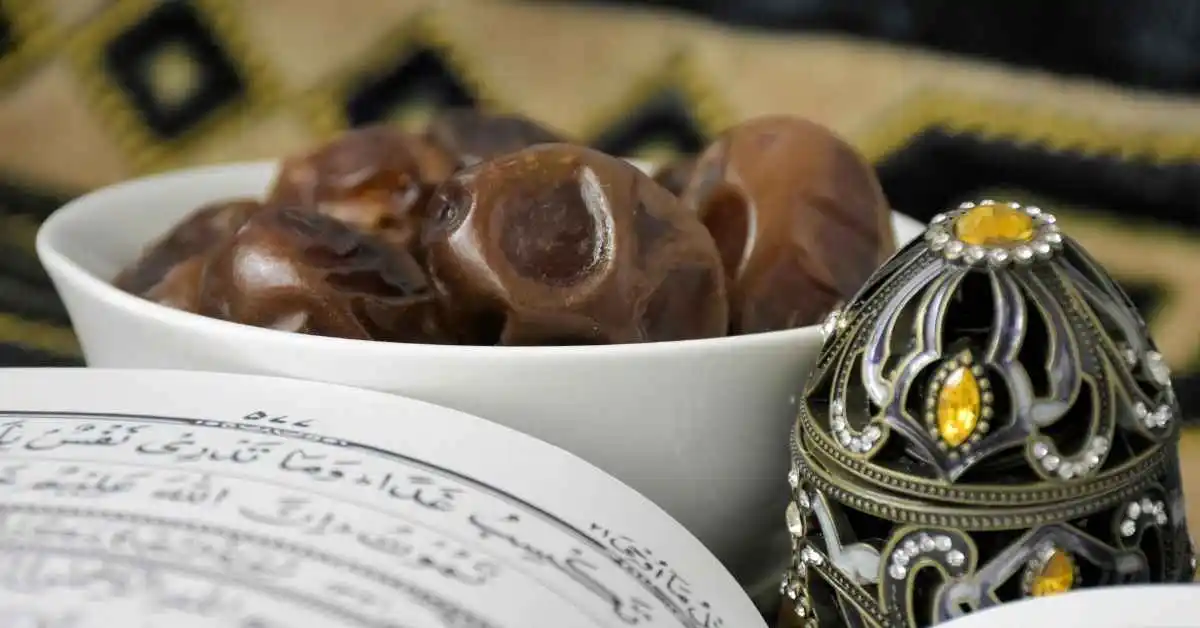
A balanced iftar plate is roughly half vegetables, one quarter protein and one quarter starchy carbohydrate, with fluid alongside.
| Plate section | What goes there | Examples |
|---|---|---|
| Half the plate | Vegetables, cooked or raw | Salad, roasted vegetables, spinach, okra, mixed vegetable curry, soup |
| One quarter | Protein | Grilled chicken, baked fish, lamb, eggs, lentils, chickpeas, beans, paneer |
| One quarter | Starchy carbohydrate | Brown or basmati rice, wholemeal roti, potato, bulgur, couscous, pasta |
| Alongside | Fluid | Water, milk, soup, unsweetened laban or yoghurt drink |
Samosas, pakoras and fried snacks are part of the culture of the table in many homes, and there is no need to ban them. Bake or air fry them instead of deep frying, serve them as one item rather than five, and put them on the same plate as the vegetables so they are part of the meal rather than a first course of their own.
Bloating after iftar is usually caused by eating too much too quickly after a long empty period, often combined with fizzy drinks and fried food.
The fixes are simple. Break the fast in the order above. Eat slowly enough that the meal takes twenty minutes rather than seven. Leave fizzy drinks out entirely, since the gas itself causes the distension. Avoid lying down straight after eating. If you are praying Taraweeh, a lighter iftar and a small second meal later in the evening is far more comfortable than one large plate at Maghrib. This matters most in the last ten nights of Ramadan, when the fasts are at their longest and the nights at their busiest.
Aim for around six to eight glasses of fluid spread across the hours between Maghrib and Fajr rather than taken in one or two large amounts.
Individual needs vary with body size, activity and health conditions, so treat that as a starting point rather than a target to force. The principle that matters is spacing. Large volumes drunk quickly are largely passed rather than absorbed, so a litre at suhoor does far less for you than the same litre spread across the evening.
A workable pattern for a UK winter Ramadan, where the window runs roughly from 17:00 to 05:00 in early February and from 18:00 to 04:40 by the final days:
| Time | Fluid |
|---|---|
| At iftar | One glass of water with dates, before the meal |
| With the meal | One glass of water or a bowl of soup |
| After Maghrib, before Taraweeh | One glass of water |
| After Taraweeh | One glass of water or milk |
| Before sleeping | One glass of water |
| At suhoor | One to two glasses of water or milk |
Food counts towards hydration too. Soups, yoghurt, milk, cucumber, tomatoes, oranges, melon and grapes all carry significant water. Salty food works in the opposite direction, which is why reducing salt in the evening is one of the most effective things you can do for the next day’s thirst.
Dark urine, a dry mouth, a dull headache and poor concentration are the usual early signs of dehydration. If they appear regularly, look first at your salt intake and your spacing, not at drinking more in one sitting.
Most Ramadan complaints trace back to three things: a skipped or poorly built suhoor, too much salt, and too much food too fast at iftar.
| Problem | Most likely cause | What to change |
|---|---|---|
| Tired by mid afternoon | Skipped suhoor, or suhoor built on sugar and refined carbohydrate | Add protein and fibre at suhoor, eat it closer to Fajr |
| Headache during the day | Caffeine withdrawal, dehydration or low blood sugar | Reduce caffeine gradually before Ramadan, space fluids across the evening |
| Very thirsty by midday | Salty suhoor or salty evening food | Cut salt at suhoor, add fluid rich fruit and vegetables |
| Bloated and heavy after iftar | Eating too much too quickly, fizzy drinks, fried food | Dates and water, pray Maghrib, then eat slowly |
| Constipation | Low fibre and low fluid | Oats, fruit, vegetables, lentils and more water across the evening |
| Heartburn at night | Large late meals, fried and spicy food, lying down after eating | Smaller meals, stay upright for an hour, reduce fried food |
| Poor sleep | Late heavy meals, caffeine in the evening, irregular nights | Lighter iftar, no caffeine after Maghrib, a short nap in the afternoon if possible |
| Dizzy or faint | Dehydration, low blood sugar, possible medical issue | Break the fast and seek medical advice if it recurs |
If you feel faint, confused or unwell, break your fast. That is the religion telling you to look after the body it gave you, not a failure of discipline.
Fasting is not one size fits all, and Islamic law already makes room for that.
Anyone with diabetes should speak to their GP, diabetes nurse or pharmacist before Ramadan begins, because medication timing and doses often need adjusting.
Many people with well controlled type 2 diabetes fast safely with a plan. Others, particularly those on insulin or with a history of hypoglycaemia, are advised not to fast. Regular blood glucose monitoring does not break the fast. Neither does treating a hypo, which must be treated immediately even if it means breaking the fast. Get this planned in January, not on the first morning of Ramadan.
Pregnant and breastfeeding women are excused from fasting where it would harm them or the child, and should make the decision with a midwife or doctor.
Those who do fast need particular attention to protein, iron, calcium and fluid, and should stop immediately if they notice reduced fetal movement, dizziness, or a drop in milk supply. Missed fasts are made up later, or Fidya is paid where making them up is not possible.
Older adults dehydrate more easily and often take medication that has to be timed with food, so a conversation with a pharmacist before Ramadan is worth more than any diet advice.
Where fasting is not possible at all because of permanent illness or age, Fidya replaces it. Allah says: “And upon those who are able to fast, a ransom of feeding a poor person” (Al-Baqarah 2:184). Our guide to Fidya and Kaffarah explains how it is calculated and when each applies.
Children are not obliged to fast before puberty, and the usual approach is to build up gradually with half days or a few full days.
Growing bodies need food and fluid. A child who fasts should still have a proper suhoor and a proper iftar, and should never be pushed to continue a fast while feeling unwell. Keeping it positive matters more than keeping it complete.
Train in the hour before iftar or two hours after it, and keep the intensity lower than usual.
Exercising in the middle of a fast with no fluid available is how people end up dehydrated and dizzy. A walk to the mosque, light resistance work after iftar, or a short session just before Maghrib all fit the month better than a heavy midday workout. Protein and fluid after training matter more than usual, since your window for both is short.
Planning the week in advance removes the two decisions most likely to be made badly: what to eat at five in the morning, and what to cook when you are hungry.
| Day | Suhoor | Iftar |
|---|---|---|
| 1 | Porridge with banana, peanut butter, milk | Dates, water, lentil soup, grilled chicken, brown rice, salad |
| 2 | Scrambled eggs with spinach, wholemeal toast, orange | Dates, water, vegetable soup, baked fish, potatoes, green beans |
| 3 | Overnight oats with yoghurt, berries, chia seeds | Dates, water, chickpea curry, wholemeal roti, cucumber salad |
| 4 | Wholemeal toast with avocado and egg, glass of milk | Dates, water, chicken and vegetable stew, bulgur, yoghurt |
| 5 | Greek yoghurt, oats, apple, walnuts | Dates, water, mixed bean soup, baked chicken, sweet potato, salad |
| 6 | Leftover rice with egg and vegetables, glass of milk | Dates, water, fish curry, basmati rice, spinach, orange |
| 7 | Porridge with dates, almonds, milk | Dates, water, lamb and vegetable stew, couscous, salad |
Two habits make this plan work. Cook once and eat twice, so that Tuesday’s stew becomes Wednesday’s base. And prepare suhoor before Taraweeh, not after.
Doing the bulk of this planning before the month starts is worth more than any single recipe. Our guide on how to prepare for Ramadan covers the rest of that preparation, and the Ramadan 2027 dates and calendar tell you exactly how long you have.
A combination of protein, fibre, slow releasing carbohydrate and fluid. Porridge with milk, banana and nuts, or eggs with wholemeal toast and a glass of milk, are two of the most reliable options.
Cut salt at suhoor, include fluid rich foods such as yoghurt, cucumber, tomato and orange, and spread your drinking across the whole evening rather than taking it all at once.
Yes. Dates provide quick natural sugar, fibre and potassium, and they follow the Sunnah. Two or three are enough before Maghrib.
Around six to eight glasses spread between Maghrib and Fajr suits most adults, though needs vary. Spacing matters more than the exact number.
Yes, at suhoor or after iftar. Reduce your intake gradually in the weeks before Ramadan to avoid withdrawal headaches, and keep it modest because caffeine increases fluid loss.
Either is possible. Weight gain usually comes from fried food, sweets and large portions in a short window. A balanced plate and smaller portions tend to produce a small, steady loss.
Healthy fasting in Ramadan is not complicated. Eat a proper suhoor close to Fajr. Break your fast with dates and water, pray, then eat a balanced plate slowly. Spread your fluids across the evening. Keep salt, sugar and frying modest. Those five habits will carry you through all thirty days with your energy and your concentration intact.
And as you set your own table, set one for someone else. Funding an iftar meal costs little and carries the reward of the fast it opens. Human Concern UK delivers food to families facing hunger and displacement, working through field teams and trusted local partners who verify need before any aid is given. Plan your meals for the month, then plan the meals you will provide, and let both be part of the same act of worship.
Give a little extra