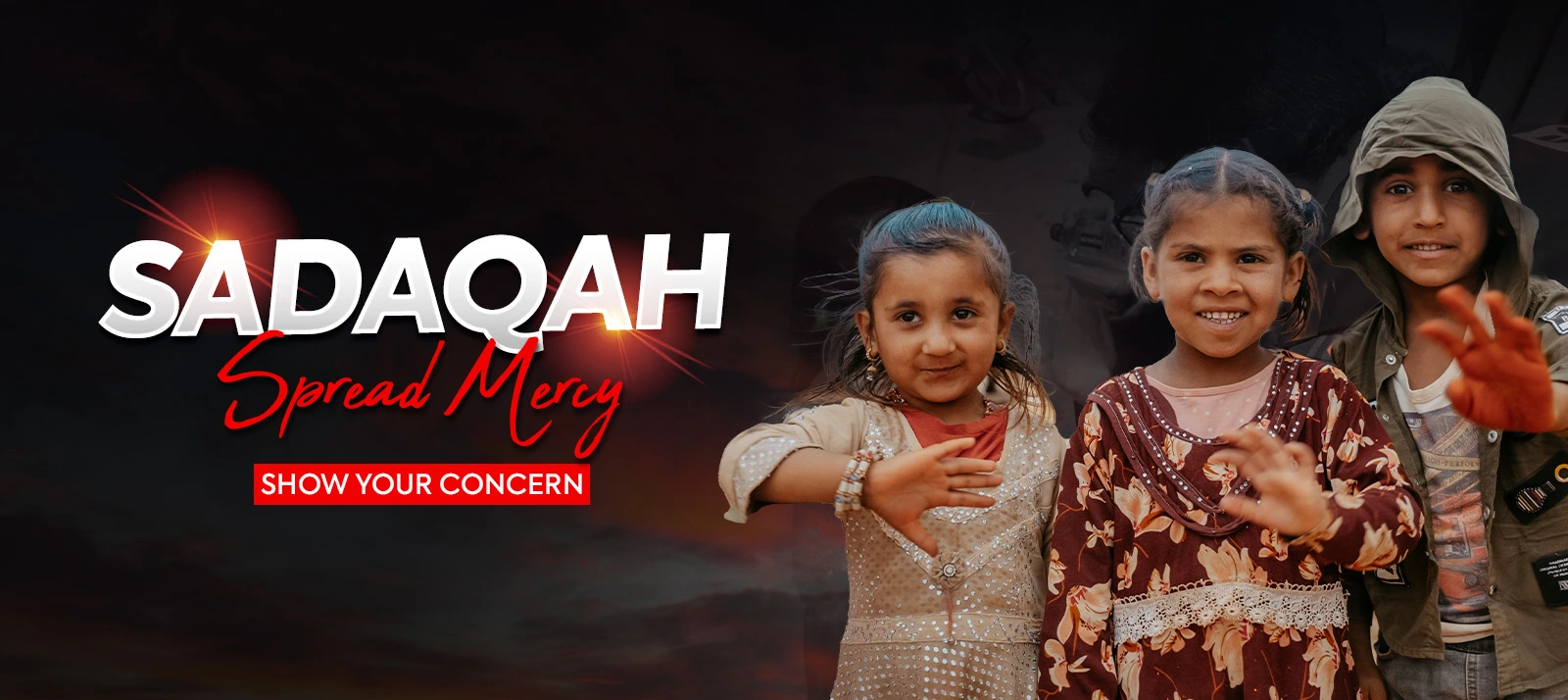
This Ramadan, Let Your Sadaqah Reach Someone Who Needs It Most
There are people breaking their fast tonight with nothing but water.
Not because they forgot to prepare. Not because they don’t want more. But because help hasn’t reached them yet.
Prophet Muhammad ﷺ said: “Whoever relieves a believer’s distress of the distressful aspects of this world, Allah will relieve his distress on the Day of Resurrection.” (Sahih Muslim 2699)
Make an Immediate Impact through Sadaqah
During Ramadan, a brief moment of hunger opens our hearts to the struggles of others. That experience reminds us that there are millions who go without food every day, and many also lack access to clean water, shelter, education, and healthcare. Sadaqah allows us to respond to those struggles immediately. Every act of Ssadaqah, no matter how small, can help transform lives.
The Prophet ﷺ said: “The best charity is that given in Ramadan.” (Tirmidhi, Hadith 598)
Sadaqah is always rewarded, but during Ramadan, every act of charity carries multiplied blessings. It is a month of mercy, compassion, and generosity, a time when the smallest contribution can have the greatest impact. Hunger, hardship, and need do not pause, and our response matters most in moments like these.
Every meal, every gift, every act of giving can bring relief and hope to someone in need right now.
Give Sadaqah Today.
What is Sadaqah?
Sadaqah is a voluntary form of charity that can be given at any time to help those in need. Unlike zakat, which is obligatory, Sadaqah can be given in small acts or large contributions, directly improving lives.
Are Sadaqah and Sadaqah Jariya the same thing?
Sadaqah: Immediate support, such as providing food, clean water, or emergency relief.
Sadaqah Jariya: A lasting contribution, such as building a well, supporting education, or funding healthcare whose benefits continue over time.
How your Sadaqah helps:
Delivering meals to families in need
Providing emergency aid during crises
Funding education for children
Supporting sustainable clean water projects in communities
When we give, we reconnect to our faith, our humanity, and one another
Prophet Muhammad ﷺ Said: “Charity does not decrease wealth.” (Sahi Muslim Hadith 2328)
Sadqah during Ramadan is not about obligation. It’s about answering a quiet call in your heart that says, I have more than I need and someone else doesn’t.
This isn’t about numbers. It’s about impact.
Give Sadaqah this Ramadan and let your compassion arrive when it matters most.
Generally, Sadaqah can be divided into two broad categories: ongoing charity (Sadaqah Jariyah) like building a well, and immediate charity, like giving food to a hungry person.
Not at all. While financial donations are a major part, it can also be an action. The Prophet taught that even a simple act of kindness, like a smile or helping someone, is considered a form of charity.
The main “rules” are sincerity (doing it for the sake of God) and giving from your Halal (permissible) earnings. There is no minimum or maximum amount for voluntary giving.
Many scholars consider Sadaqah Jariyah to be the biggest or best form because its benefits and rewards continue long after the initial act. Providing water is often highlighted as a particularly virtuous act.
Unlike Zakat, which has specific categories of recipients, voluntary charity can be given to anyone in need, including family members (who are not your direct dependents), neighbors, or even non-Muslims.
While any time is good, giving during blessed times like Ramadan, especially on Laylat al-Qadr, the first ten days of Dhul Hijjah, or on Fridays is highly encouraged.
He said many things, but one of the most powerful is, “Protect yourself from hellfire even by giving a piece of a date as charity.” This shows that no act of giving is too small.